- Skilled Nursing Newsletter by Physicians Services Group of Florida
- Posts
- Are You Still Trying to Shed Weight but Don’t Have the Time?
Are You Still Trying to Shed Weight but Don’t Have the Time?
Chris DeNapoles M.D.
January 29, 2026
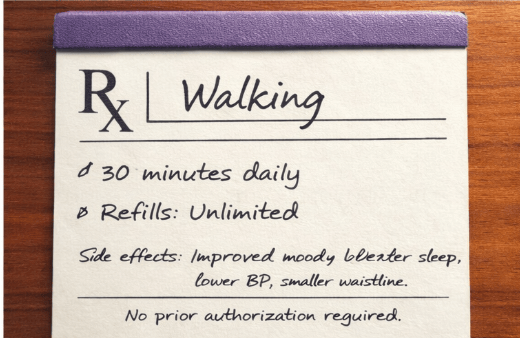
In skilled nursing and healthcare environments, we often talk about complex interventions — medications, therapies, procedures. But one of the most powerful tools for improving health, mood, circulation, and even longevity requires no prescription at all.
It’s walking.
Simple. Accessible. Evidence-based.
The Science Behind Walking and Weight Loss
Weight loss ultimately comes down to energy balance. Roughly speaking, one pound of body fat represents about 3,500 calories.
At a moderate pace (about 3–4 miles per hour), most adults burn approximately 80–120 calories per mile, depending on body weight and walking speed. That translates to:
About 35–50 miles of walking to burn one pound of fat
Roughly 70,000–100,000 steps (based on approximately 2,000 steps per mile)
That sounds like a lot — but broken down daily:
10,000 steps per day equals about 5 miles
At that rate, you could burn the equivalent of a pound in 1–2 weeks, depending on diet and metabolism
More importantly, walking is sustainable. Sustainability beats intensity every time.
Cardiovascular & Circulatory Benefits
Research consistently shows that brisk walking improves endothelial function, enhances circulation and oxygen delivery, lowers blood pressure, improves insulin sensitivity, reduces LDL cholesterol, and decreases overall cardiovascular risk.
A large meta-analysis published in Circulation demonstrated that even moderate-intensity walking significantly reduces cardiovascular mortality risk. In fact, walking just 30 minutes per day can reduce heart disease risk by up to 30–40 percent.
For our skilled nursing patients — and for staff — improved blood flow supports better wound healing, reduces venous stasis risk, enhances mobility, and improves overall energy levels.
Walking and Mood: A Natural Antidepressant
Walking doesn’t just move your body — it changes your brain.
Studies published in JAMA Psychiatry and The American Journal of Preventive Medicine show that regular walking reduces symptoms of depression and anxiety. Mechanisms include increased endorphin release, improved serotonin and dopamine signaling, reduced cortisol levels, and enhanced brain-derived neurotrophic factor (BDNF).
Even a 10–15 minute brisk walk can produce measurable improvements in mood.
For healthcare professionals working in high-stress environments, walking can be one of the most practical resilience tools available.
The Power of Walking Outside
Emerging research on green space exposure shows that being outdoors amplifies the benefits of exercise.
Studies published in Environmental Health Perspectives and Scientific Reports demonstrate that time spent in nature lowers blood pressure, reduces stress hormone levels, improves immune function, and enhances mood and cognitive performance.
One large study found that spending just 120 minutes per week outdoors — even if broken into short sessions — was associated with significantly better overall health and well-being.
And the impact can happen quickly. Research suggests that even 10–20 minutes outside can measurably reduce stress markers.
The Cost of Being Indoors All Day
Modern life keeps many of us inside — under artificial lighting, in climate-controlled spaces, often seated for long periods.
Prolonged indoor time is associated with lower vitamin D levels, disrupted circadian rhythm alignment, increased sedentary behavior, higher rates of metabolic dysfunction, and increased stress and mood disturbance.
Even brief outdoor exposure can reset circadian signals, improve alertness, and enhance sleep quality.
Multitask Your Way to Better Health
One of the most underutilized strategies for busy professionals is walking while you talk.
Consider taking phone calls during brisk walks, catching up with family or friends while walking, scheduling walking meetings when appropriate, or taking short post-meal walks to improve glucose control. Research shows that light activity after meals significantly improves postprandial glucose levels, particularly helpful in preventing insulin resistance.
You don’t need a gym membership. You don’t need complicated equipment. You need shoes and intention.
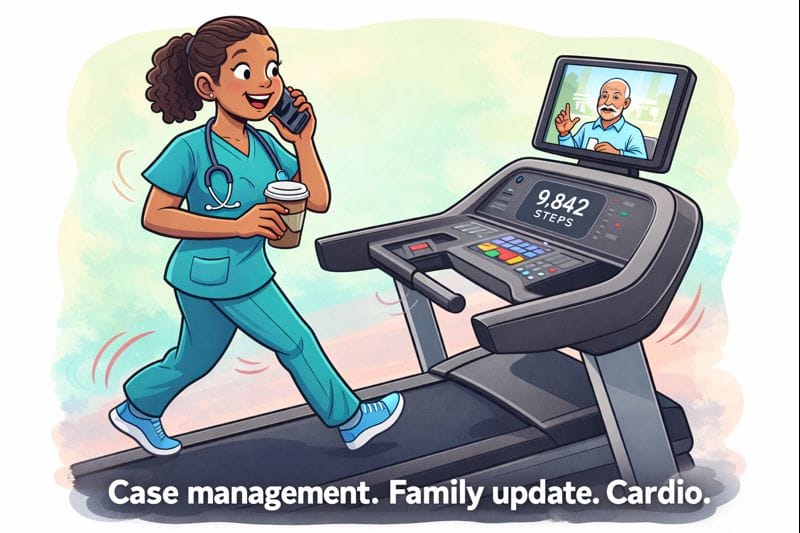
Pro Tip: Turn the Treadmill into a Fat-Burning Multitask Machine
If you’re unable to walk outside, a treadmill can be just as effective — especially if you increase the incline. Walking at an incline significantly increases calorie expenditure without requiring a dramatic increase in speed. This allows you to burn more calories in less time while keeping the effort manageable.
A practical and sustainable approach is to set a moderate incline, choose a brisk but comfortable pace, and put on YouTube videos, podcasts, or educational content on your phone. Because incline walking is low impact yet metabolically demanding, many people find they can sustain it for extended periods without feeling exhausted.
This is a powerful way to combine professional development, entertainment, or social connection with physical activity — making consistency much easier.
A Practical Weekly Goal
Start with:
7,000–10,000 steps per day
At least 30 minutes of brisk walking most days
Two short outdoor walks per week if possible
Small, consistent effort compounds over time.
The Bottom Line
Walking improves weight management, circulation, cardiovascular health, mood, stress resilience, metabolic health, and overall longevity.
It is one of the simplest, safest, and most accessible interventions we can encourage — both for ourselves and for those we serve.
Sometimes the most powerful medicine doesn’t come in a bottle.
It comes one step at a time.
Feel free to share this email newsletter and our website with friends and colleagues. You can join the email list by clicking the link below and entering your email. Skilled Nursing Newsletter by Physicians Services Group of Florida
Website: PSGFlorida.com
All the best!
Christopher DeNapoles M.D.
Chief Medical Officer
Physicians Services Group of Florida

Disclaimer: This newsletter provides general information on medical education and related topics. The content is not intended to be a substitute for professional medical advice, diagnosis, or treatment. Always seek the advice of your physician or other qualified healthcare provider with any questions you may have regarding a medical condition or treatment. The information provided in this newsletter is not intended to create a physician-patient relationship, nor does it constitute an endorsement or recommendation of any particular medical product, treatment, or service. In no event shall the publisher, author(s), or any organization with which the author(s) may be affiliated be liable for any damages whatsoever, including but not limited to direct, indirect, special, consequential, or incidental damages, arising out of or in connection with the use or inability to use the information provided in this newsletter. The information provided in this newsletter is provided "as is" without any representations or warranties, express or implied.